What Is the Anat Baniel Method?
A Parent’s Guide to Neuroplasticity Movement for Children
If your child is struggling with movement, coordination, or development, you’ve likely been told to focus on strengthening muscles, stretching tightness, or practicing movements over and over again.
But what if your child’s progress doesn’t come from working harder,
but from helping their brain learn?
The Anat Baniel Method® of Neuromovement® is a gentle, brain-based approach that focuses on how children learn to move, think, and develop, using the science of neuroplasticity.
Instead of trying to “fix” the body, this approach helps the brain build new connections that can lead to meaningful improvements in:
-
movement and coordination
-
regulation and calmness
-
learning and awareness
Many parents explore the Anat Baniel Method® when looking for a different approach, especially when traditional therapies feel limited or slow.
Quick Navigation:
• What Is the Anat Baniel Method®?
• Who the Anat Baniel Method® Can Help
• What Happens in an ABM® Session
• The Science of Neuroplasticity
• Research on the Anat Baniel Method®
• How ABM® Compares to Other Methods
• Can Parents Use These Principles at Home?
• Find an Anat Baniel Method® Practitioner
• Frequently Asked Questions
What Is the Anat Baniel Method®?
The Anat Baniel Method® of Neuromovement® is a neurodevelopmental approach based on the science of neuroplasticity, or the brain’s ability to change, adapt, and form new connections throughout life.
Developed by Anat Baniel, the method grew from the work of the Feldenkrais Method and modern neuroscience.
Rather than trying to force the body into the “correct” movement, the method helps the brain discover new ways to move.
Practitioners use slow, gentle movement and increased awareness to help the brain:
-
notice differences
-
organize the body more efficiently
-
develop new patterns of movement
Over time, this can support improvements not just in movement, but in how a child learns, interacts, and experiences the world.
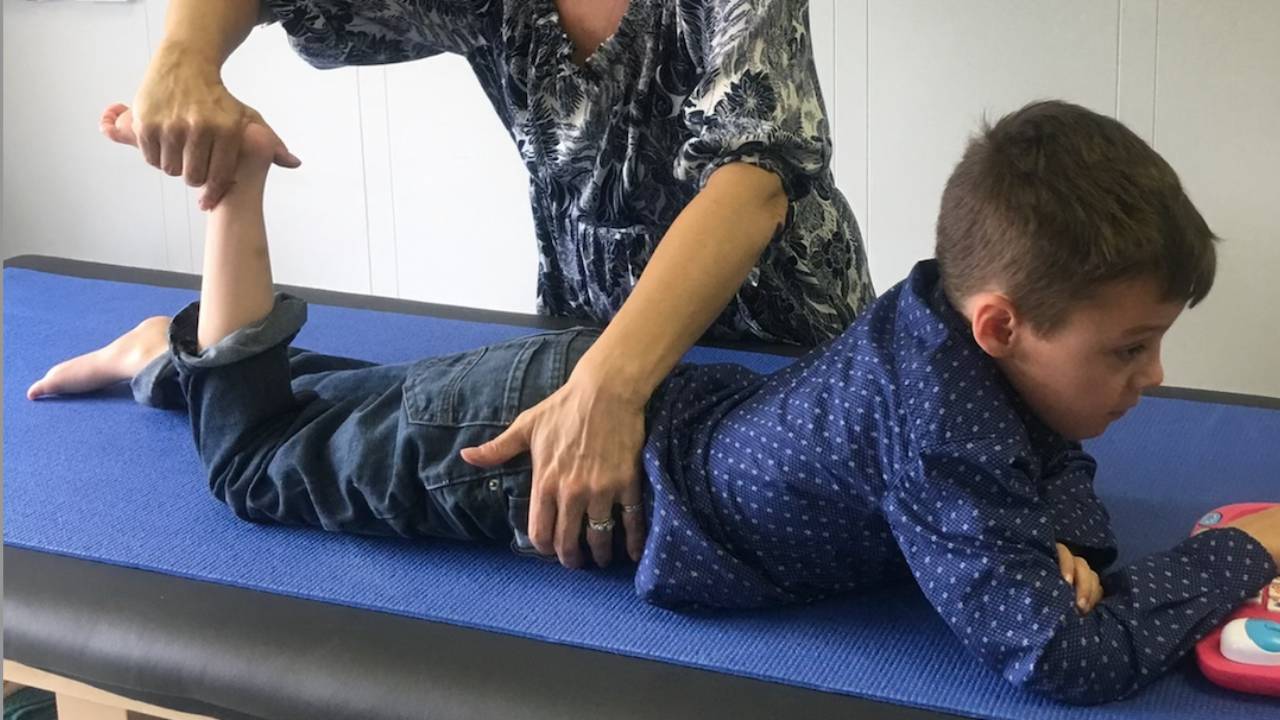
Gentle movement lessons help the brain notice new possibilities for movement and coordination
Who can the Anat Baniel Method® Help?
Parents often seek the Anat Baniel Method® when their child has challenges with movement, coordination, or development.
The method is commonly used with children who have:
• Cerebral palsy
• Developmental delays
• Genetic conditions
• Hypotonia or low muscle tone
• Brain injury
• Autism spectrum conditions
• Motor planning challenges
Parents often seek the Anat Baniel Method® when they notice:
• poor head control
• difficulty rolling or crawlin
• stiffness or spasticity
• challenges with sitting or walking
• difficulty with regulation or calmness
• progress feels slow despite therapy
Because the method focuses on the brain’s learning process, it can support development across many areas, not just movement.
While many children begin Anat Baniel Method® lessons as babies or toddlers, the principles of neuroplasticity apply throughout life, and older children can benefit as well.
What Happens in an Anat Baniel Method® Session?
During an Anat Baniel Method® of Neuromovement® lesson, the child typically lies comfortably on a padded table while the practitioner uses slow, gentle movements to guide the child through small variations of movement.
These movements are designed to help the brain notice differences and organize the body more efficiently.
Sessions are calm and exploratory rather than forceful or repetitive.
Unlike therapies that rely on repetition or effort,
the goal is to create new experiences the brain can learn from.
This increased awareness helps the brain develop new patterns for coordination and movement.
Over time, parents often notice changes such as:
• improved head control
• reduced spasticity
• easier rolling or sitting
• increased awareness and engagement
• improved regulation and calmness
Many parents first notice small changes such as their child becoming more aware of their body, better coordination and balance, calmer and more engaged.
The Science Behind the Anat Baniel Method®: Neuroplasticity
The foundation of the Anat Baniel Method® is neuroplasticity.
Neuroplasticity refers to the brain’s ability to change and form new neural connections throughout life.
When the brain receives new sensory information and movement experiences, it can reorganize itself and develop new patterns for movement and learning.
For children with developmental challenges, the brain may simply need more opportunities to explore and learn new movement patterns.
By introducing small variations in movement and increasing awareness, the Anat Baniel Method® helps create the conditions for the brain to:
• notice differences
• form new connections
• organize movement more efficiently
Modern neuroscience continues to show that the brain remains capable of learning and adapting, even when development has been delayed or interrupted.
Is There Research on the Anat Baniel Method®?
The Anat Baniel Method® of Neuromovement® is grounded in principles of neuroplasticity and builds on the foundations of the Feldenkrais Method, which has been studied in a variety of clinical and research settings.
Research into neuroplasticity continues to support the idea that the brain can change and reorganize through new sensory and movement experiences.
While research specific to the Anat Baniel Method® is still growing, many families report improvements in areas such as movement, coordination, and engagement after participating in lessons.
As with many neurodevelopmental approaches, outcomes can vary depending on the child’s individual condition, learning opportunities, and overall developmental context.
Parents considering any therapeutic approach should consult with qualified practitioners and healthcare professionals when determining what may be appropriate for their child.
How the Anat Baniel Method® Compares to Other Neurodevelopment Approaches
Parents exploring neuroplasticity-based therapy for children often come across a range of approaches that focus on brain development, movement, and learning.
While each method has its own philosophy and techniques, many share a similar foundation: supporting the brain’s ability to change and grow through meaningful movement experiences and interaction.
Some approaches parents may explore alongside the Anat Baniel Method® include:
• Feldenkrais Method®
uses slow, gentle movement and increased awareness to support coordination, flexibility, and motor learning
• NeuroHorizon Method®
a newer neurodevelopment approach focused on supporting brain function and developmental progress through targeted movement
• Primitive Reflex Integration
focuses on identifying and integrating retained primitive reflexes that may affect motor development, coordination, and regulation
• Rhythmic Movement Training
uses rhythmic, repetitive movements based on early developmental patterns to support the nervous system and motor development
• Masgutova Neurosensorimotor Reflex Integration (MNRI®)
works with reflex patterns to support regulation, coordination, and overall neurological function
• DIR Floortime
focuses on emotional connection, communication, and developmental milestones through play-based interaction
• Dynamic Movement Intervention (DMI®)
uses dynamic, hands-on movement challenges to help develop postural control, balance, and functional motor skills
While these approaches may look different in practice, many are grounded in shared principles:
-
the brain can change and adapt (neuroplasticity)
-
movement plays a central role in child development
-
learning happens through experience, not just repetition
-
each child benefits from individualized support
Families often explore one or more approaches over time, especially when looking for alternatives or complements to traditional physical therapy, occupational therapy, or speech therapy.
There is no one “right” approach — the goal is finding the combination of supports that best meets your child’s unique needs and helps them continue to grow, learn, and participate more fully in daily life.
Can Parents Use These Principles at Home?
Many parents want to support their child’s development between sessions.
Because the Anat Baniel Method® is based on how the brain learns, small changes in how you move and interact with your child can make a meaningful difference.
Starting with simple, gentle movements can help:
-
increase awareness
-
support coordination
-
create new learning opportunities throughout the day
Not Sure Where to Start?
If you're feeling unsure which approach is the right fit, you're not alone.
Many parents start with wondering what will actually help, and wanting something gentle they can try at home.
Starting with simple, gentle movements can be a helpful first step, especially for children who are sensitive to more intensive therapies.
To help, I created a short free video where I guide you through 3 gentle exercises to support:
• rolling
• coordination
• body awareness
These are simple ways to begin supporting your child’s development at home, even if you're just getting started.
Frequently Asked Questions
Does the Anat Baniel Method® help cerebral palsy?
Many families with children who have cerebral palsy explore the Anat Baniel Method® because it focuses on helping the brain organize movement more efficiently.
Is the Anat Baniel Method® physical therapy?
The method focuses on helping the brain learn through movement rather than strengthening or stretching muscles directly.
Can older children benefit from the Anat Baniel Method®?
Yes. Because neuroplasticity continues throughout life, older children and even adults can benefit from learning new movement patterns.
Can neuroplasticity help developmental delays?
Neuroplasticity-based approaches focus on helping the brain learn and adapt, which can support developmental progress.
Find an Anat Baniel Method® Practitioner Near You
Working with a trained practitioner can help families better understand how these principles apply to their child’s unique needs.
Practitioners trained in the Anat Baniel Method® of Neuromovement® offer lessons around the world.
Find an Anat Baniel Method® of Neuromovement® Practitioner Near You
The information on this website is provided for educational purposes only and is not intended as medical advice.
The Anat Baniel Method® of Neuromovement® and other movement-based approaches discussed on this site are provided by trained practitioners. Outcomes can vary depending on the individual child and their needs.
Parents should consult with qualified healthcare professionals when making decisions about therapy or medical care for their child.
This website is an independent educational resource and is not affiliated with or endorsed by the organizations associated with these methods.